
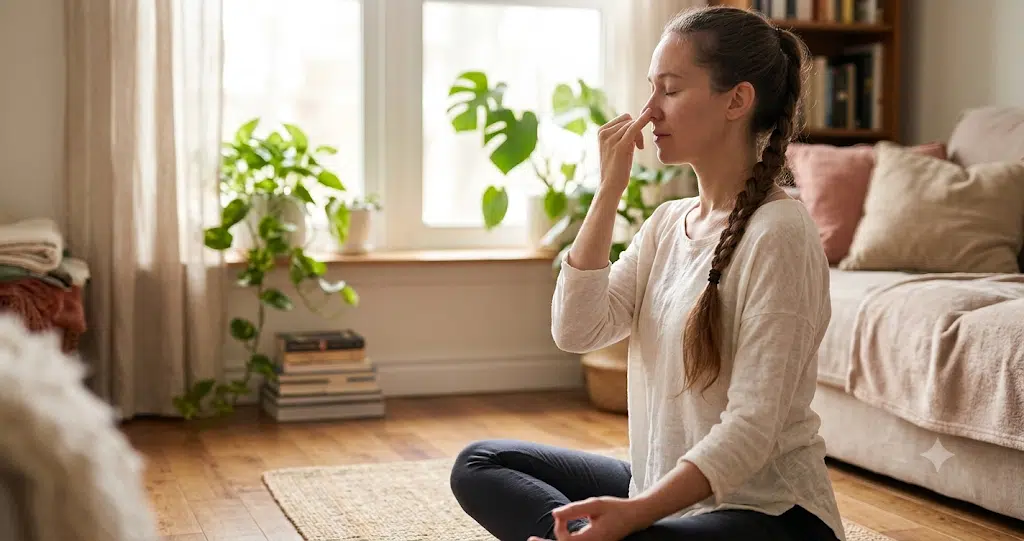
Key Takeaways
• Start Gently: Begin with 2 to 5 minutes a day, starting with Abdominal Breathing in your first week. Short and regular practice is more nourishing than long and occasional practice.
• Match the Breath to Your Dosha: Vata is soothed by slow, grounding breaths, Pitta by cooling breaths such as Sheetali, and Kapha by lively, warming breaths such as Kapalabhati and Bhastrika.
• Six Beginner Techniques: Abdominal Breathing, Anulom Vilom, Bhramari, Ujjayi, Sheetali and Kapalabhati, each with simple steps and its mind-body benefit.
• Personalised Guidance: A Nadi Pariksha at Vedang Clinic helps choose the practice, its pace and the best time of day for you.
Many of my patients tell me they would love to begin breathing practices, and they ask me how to start with confidence. That is a wonderful question. Pranayama is one of the gentlest and most rewarding gifts of Ayurveda and Yoga, and a beginner needs only a few quiet minutes and a chair.
Pranayama is a personal practice. The breath that suits your neighbor may be different from the breath that suits you, because every person carries a unique constitution. In this guide, I first explain what Pranayama is and how Ayurveda understands it. Then I share six beginner techniques, show you how to choose according to your dosha, and describe how I guide each person at Vedang Clinic.
When the breath becomes slow and even, the body relaxes, and the mind follows.
What is Pranayama, in simple words?
Pranayama comes from two Sanskrit words. “Prana” means life energy, or the vital breath. “Ayama” means to extend, to guide or to regulate. Together, they describe guiding your breath with awareness.
Think of tuning a musical instrument before a concert. A few minutes of mindful breathing tunes the body and mind before the day’s work begins.
Pranayama is a part of the yogic path, and it is also deeply woven into Ayurveda, India’s ancient system of medicine. You do not need any particular belief or religion to practise it. It is a way of giving loving attention to something you already do all day long.
The three movements of every breath
Classical texts describe every Pranayama through three simple movements:
- Puraka, the slow, smooth inhalation
- Kumbhaka, the natural pause (an advanced practice that is taught only in person, after the foundation is steady)
- Rechaka, the long, unhurried exhalation
By shaping Puraka and Rechaka in different ways, the sages created the many Pranayamas we know today. Some are cooling, some warming, some balancing, and some deeply tranquillising. This is why there is a breath for every season of life.
How is Pranayama a part of Ayurvedic healing?
In Ayurveda, healing means caring for the whole person. Ayurveda looks at body and mind together, and the classical texts describe the two as closely linked. What stirs the mind is felt in the body, and what settles the body brings peace to the mind. This is the mind-body connection that Ayurveda has taught for thousands of years.
The breath is a beautiful doorway into this connection. Breathing happens by itself, and yet we can also guide it with intention. When the breath becomes slow and even, the body relaxes, and the mind follows.
The traditional texts also link certain emotions with certain parts of the body. Grief, for example, is traditionally linked with the lungs, which is why gentle breathing is so comforting in times of sorrow.
In Ayurveda, a healthy life is called Swasthya, a state in which the doshas are balanced, Agni (digestive and metabolic fire) is bright, Ojas (vital strength and immunity) is abundant, and the mind is serene and content. Classical Ayurvedic and yogic teachings describe regulated breathing as a way to nurture all of these.
Pranayama is offered on its own, and it is also beautifully combined with counselling or with Panchakarma, the Ayurvedic cleansing therapies, so that the benefits are deeply rooted and long-lasting.
Understanding your doshas
Ayurveda describes three fundamental energies, called doshas. They arise from the five great elements (Panchamahabhutas):
- Vata (space and air) is the energy of movement.
- Pitta (fire and water) is the energy of heat and transformation, like the flame under a cooking pot.
- Kapha (water and earth) is the energy of steadiness and cohesion, like the clay that holds a pot together.
Every person is born with a unique proportion of the three, called Prakriti (natural constitution). In daily life, the doshas shift with the seasons, the time of day, food, work and emotions, and this shifting state is called Vikriti. Pranayama is chosen to bring you back to your natural balance. Ayurveda’s guiding principle is to balance with opposite qualities, so a cooling breath soothes excess heat, and a lively, warming breath awakens heaviness.
The Prana within: nadis and the five Vayus
Ayurveda and Yoga describe prana as flowing through subtle channels called nadis. Three are especially well known:
- Ida, the cooling, calming channel, linked with the left nostril
- Pingala, the warming, energising channel, linked with the right nostril
- Sushumna, the central channel, which becomes luminous when Ida and Pingala are in harmony
Nadi Shodhana, alternate nostril breathing, is called “channel clearing” because it brings Ida and Pingala into harmony.
The tradition also describes five forms of prana, called the Pancha Vayus:
- Prana Vayu moves upward in the chest and governs breathing, the heart and inhalation.
- Apana Vayu moves downward in the lower abdomen and governs elimination and exhalation.
- Samana Vayu works at the navel and governs digestion and assimilation.
- Udana Vayu rises in the throat and governs speech, expression and aspiration.
- Vyana Vayu pervades the whole body and governs circulation and coordination.
When the five Vayus move in harmony, we feel vital, light and centred. A calm, rhythmic breath helps them settle into their natural flow.
What are the benefits of Pranayama?
The tradition describes many gifts of regular practice:
- A feeling of calm, steadiness and emotional balance
- Clarity of mind and ease in concentration
- Restful sleep
- A brighter Agni, supporting healthy digestion
- Growth of Ojas, the essence of vitality and immunity
- Freer, deeper and more comfortable breathing
- Balance of Vata, Pitta and Kapha
- A natural preparation for meditation, because a steady breath leads to a steady mind
In my years of practice, I have seen many patients describe this quiet, grounded calm after a few weeks of gentle, regular breathing.
Practising Pranayama wisely: for a safe and joyful start
Most healthy adults can enjoy gentle Pranayama. Ayurveda always teaches practice according to the individual, so I advise a conversation with your doctor, or with me, before you begin if you have:
- Heart conditions
- High or low blood pressure
- Asthma or COPD (a long-term lung condition)
- Recent surgery, especially on the chest or abdomen
- A hernia
- Epilepsy
- Glaucoma (raised pressure within the eye)
- Pregnancy
- Any other long-term health condition
The golden rule is comfort. Let the breath stay smooth, soft and effortless. If you ever feel dizzy or tired, return to natural breathing and rest. That is your body guiding you.
Chest pain, severe breathlessness, fainting or any sudden new symptom call for prompt medical attention. Please see a doctor or visit the nearest hospital without delay.
How do I get ready? What to expect when you begin
You do not need any equipment. Here is how I suggest you set up:
- Sit upright on a chair, or on the floor with your back supported. A straight spine allows prana to flow freely.
- Wear loose, comfortable clothes.
- Choose a quiet, clean corner of your home.
- Practise on an empty stomach, or two to three hours after a meal.
- Breathe through the nose, which is the traditional way (the cooling breaths in Technique 6 are the gentle exceptions).
What it feels like. Most people feel a gentle calm. Some feel pleasantly light in the first few days as the body adapts to slower breathing. Simply return to natural breathing for a minute, and begin again.
Begin with 2 to 5 minutes a day. Short and regular practice is more nourishing than long and occasional practice. Keep every breath smooth and unhurried.
Short and regular practice is more nourishing than long and occasional practice.
When is the best time to practise?
Ayurveda describes the day in three-dose rhythms, and each time of day has its own character:
- Early morning (around 6 to 10 am) is Kapha time, a calm, steady period. This is the traditional time for Pranayama, and a lively breath at this hour clears morning heaviness.
- Midday (around 10 am to 2 pm) is Pitta time, when fire is strongest. A cooling breath suits it well.
- Late afternoon (around 2 to 6 pm) is Vata time, when the mind may feel scattered. Slow, grounding breaths bring it home.
The seasons have their own rhythm too. Vata is prominent in autumn and winter, Pitta in summer, and Kapha in spring. Choosing your breath to match the season is a lovely way to live in harmony with nature.
6 gentle Pranayama techniques for beginners
Each technique below includes simple steps, its mind-body benefit and the dosha it traditionally supports. By “mind-body benefit,” I mean the way a practice nourishes how we feel inside, as well as how the body works.
Where to begin: Start with Abdominal Breathing (Technique 4) in your first week. Then add the others one at a time, as you feel ready.
1. Kapalabhati (skull-shining breath), for the experienced beginner
What it is. A short, light, rhythmic breath out through the nose. The inhalation happens by itself.
How to do it.
- Sit upright with your hands on your knees.
- Take a normal, easy breath in.
- Give a few small, gentle puffs out through the nose at a slow pace, then rest and breathe naturally.
Mind-body benefit. Kapalabhati is traditionally an energising and cleansing practice. It awakens a bright, clear mind and is especially loved for Kapha, to dispel dullness and heaviness.
Best learned with guidance if you have high blood pressure, heart conditions, a hernia, a breathing condition, recent surgery or pregnancy. Kapalabhati is the most active of the six, so I teach it in person, after the gentler practices are well established.
2. Anulom Vilom (alternate nostril breathing)
What it is. You breathe through one nostril at a time, taking turns. It is closely related to Nadi Shodhana, the classical “channel-clearing” breath.
How to do it.
- Sit upright. Rest your left hand on your knee. Gently close your right nostril with your right thumb.
- Breathe in slowly through the left nostril. Close it with your ring finger, open the right, and breathe out slowly through the right.
- Breathe in through the right, switch, and breathe out through the left. That is one round.
Keep the breath free-flowing, without pauses. If your arm feels tired, rest your elbow on a cushion.
Mind-body benefit. Traditionally, it brings Ida and Pingala into harmony, giving a feeling of balance, steadiness and a quiet mind. It is considered beneficial for all three doshas, and it is especially soothing for Vata and Pitta.
Best enjoyed when the nose is clear and comfortable.
3. Bhramari (humming bee breath)
What it is. You breathe in, then hum softly as you breathe out, like a gentle bee.
How to do it.
- Sit comfortably with your lips closed and your teeth slightly apart.
- Breathe in slowly through your nose.
- Breathe out slowly while humming softly. Keep the hum smooth and gentle.
Mind-body benefit. The hum creates a soothing vibration in the head and chest. It is classified as a tranquillising Pranayama, and many people with a busy mind love it. It is a favourite for calming Vata and Pitta. You can read more in our guide on Pranayama for anxiety and stress.
Best enjoyed when the ears feel comfortable and healthy.
4. Abdominal breathing (belly breathing)
What it is. This is the easiest place to begin. It is a foundation practice that prepares you beautifully for the classical Pranayamas. It awakens the diaphragm, the large breathing muscle beneath the lungs, and encourages Apana and Samana Vayu to flow smoothly.
How to do it.
- Sit comfortably, or lie down. Place one hand on your belly.
- Breathe in slowly through your nose and feel your belly rise.
- Breathe out slowly and feel your belly gently sink.
Mind-body benefit. A deep belly breath invites the whole body into relaxation, and a relaxed body helps the mind settle. It is a lovely practice for calming Vata.
Best learned with your doctor’s blessing after recent abdominal surgery or if you have a hernia.
5. Ujjayi (victorious breath)
What it is. You slightly narrow the back of your throat as you breathe. This makes a soft sound, like gentle ocean waves.
How to do it.
- Sit upright and relax your face and jaw.
- Breathe in through your nose, letting the throat narrow just a little.
- Breathe out through your nose in the same soft way. The sound is quiet, close to a whisper.
Mind-body benefit. The steady sound gives the mind something gentle to follow, bringing focus and calm. Ujjayi is described as a tranquillising practice that soothes Vata and Pitta. Longer exhalations deepen the soothing effect, and it also supports Agni.
Best practised softly if you have low blood pressure or any throat condition. Keep the sound light and the effort minimal.
6. Sheetali (cooling breath), with its cousin Sheetkari
What it is. A refreshing breath that is taken in through the mouth. It is a traditional favourite for cooling the body and mind.
How to do it.
- Sit upright and relax your shoulders.
- Curl the sides of your tongue into a gentle tube and let the tip rest just outside your lips. If your tongue does not curl, try Sheetkari instead (see below).
- Breathe in slowly through the tongue, as if sipping cool air through a straw.
- Close your mouth and breathe out slowly through your nose.
Sheetkari variation. Gently bring the teeth together, part the lips, and breathe in with a soft hissing sound. Then close the mouth and breathe out through the nose.
Mind-body benefit. Sheetali and Sheetkari are classical cooling Pranayamas. They are traditionally used to calm excess Pitta, for those moments of heat, irritation or restlessness, and they bring a refreshing, soothing feeling to the body and mind. Sheetkari is also said to balance Vata.
Best enjoyed in clean, fresh surroundings and in warm weather, when cooling is most welcome. In cold weather, or when Kapha is high, I suggest a warming practice instead.
Which technique is right for me? Pranayama is personal
Ayurveda teaches that the best Pranayama is the one that restores your own balance. Here is a general guide:
| Your dosha or state | Qualities to bring | Pranayamas traditionally suited |
| Vata: restless, scattered, light sleep | Warmth, grounding, slow rhythm | Abdominal Breathing, Anulom Vilom, Bhramari, Ujjayi, Sheetkari |
| Pitta: intense, irritable, overheated | Coolness, softness, ease | Sheetali, Sheetkari, Anulom Vilom, Bhramari, Chandra Bhedana (left-nostril breath) |
| Kapha: heavy, sluggish, congested | Lightness, warmth, stimulation | Kapalabhati, Bhastrika, Surya Bhedana (right-nostril breath), Ujjayi |
A few more pointers:
- Feeling restless or tense: Bhramari and Abdominal Breathing bring comfort.
- Wanting a gentle start: Abdominal Breathing is the ideal first step.
- Wanting steadiness and focus: Anulom Vilom and Ujjayi suit many people beautifully.
- Feeling dull or low in energy: Kapalabhati and Bhastrika are traditionally used, taught in person.
Bhastrika (the bellows breath) is a classical warming practice that I teach in person. It is a treasured technique for Kapha, and it is introduced once your foundation practice is steady.
Please treat this as a general guide. Think of a garment that is tailored to your measure. In the same way, Pranayama is most beautiful when it is tailored to you. Two people with the same concern may be given quite different practices, because their constitutions are different.
Ayurveda teaches that the best Pranayama is the one that restores your own balance.
Classical families of Pranayama
The classical texts, including the Hatha Yoga Pradipika, describe the main Pranayamas in families:
- Balancing: Nadi Shodhana (Anulom Vilom)
- Tranquillising: Bhramari and Ujjayi
- Cooling: Sheetali, Sheetkari and Chandra Bhedana
- Warming and energising: Bhastrika, Kapalabhati and Surya Bhedana
Knowing these families helps you understand why each practice feels the way it does.
Find the Breath That Suits You
If you would like help finding the breathing practice that suits you, I would be happy to guide you in person at my clinic in Bandra, starting with a Nadi Pariksha.
Begin with a Nadi Pariksha at Vedang Clinic →
Pranayama for lung health
In Ayurveda, the lungs and chest are the home of Prana Vayu and a seat of Kapha. Slow, deep, mindful breathing helps you become aware of your breath and breathe with more ease and comfort. Ayurveda has a rich tradition of supporting respiratory wellbeing through diet, daily routine, herbs and breathing. If you have a lung condition, I will gladly design a gentle plan with you.
How does Ayurveda look at breathing?
Ayurveda sees the breath as the carrier of prana, the life energy. It links the breath closely with Vata, the energy of movement.
Here is an everyday image. Vata is like the wind. When it blows steadily, we feel balanced. When it gusts, we may feel restless or scattered. Slow, rhythmic breathing is the traditional way of bringing the wind to a gentle, steady flow.
Ayurveda also teaches that breath and Agni are companions. A steady, nourishing breath supports the digestive fire, and a bright Agni builds Ojas, the radiant essence of health.
How I teach Pranayama: through Nadi Pariksha
Nadi Pariksha is the Ayurvedic art of reading the pulse at the wrist. I use it to understand a person’s constitution and their present energy patterns, meaning how their body and mind are working at that moment. I have practised at Vedang Clinic since 2008, and I have done more than 1,500 Nadi Pariksha readings.
At Vedang Clinic, I teach Pranayama after a Nadi Pariksha. The reading shows me which practice to offer, how gentle or lively it should be, and whether it is best taught alongside counselling or on its own. I also take into account the person’s sleep, digestion, season and daily routine.
That is the thinking behind personalised Pranayama therapy, and behind combining Ayurveda and Pranayama in one complete plan. If you are curious about your own body type, you can read about understanding your dosha – Ayurveda Dosha : Know Your Ayurvedic Body Type for Yourself
Why is Pranayama part of our Vedic Counselling programme?
At Vedang Clinic, our Vedic Counselling is a personalised “mind workshop.” In simple words, it is a safe space to talk, to understand your own thoughts and feelings, and to learn tools that you can use yourself. People often come to it for emotional clarity, for help with day-to-day stress, or to understand old patterns of thinking.
I include Pranayama in this programme for three reasons.
First, counselling nurtures the mind through conversation and awareness, while breathing nurtures the body. Together, they care for the whole person.
Second, a calm body makes it easier to look at difficult feelings with clarity. When the breath is slow and soft, thoughts become easier to understand.
Third, breathing is a practice you can enjoy at home between sessions. Counselling is not only about the hour in the clinic. It is about what you carry into your daily life.
Counselling and Pranayama sit beautifully alongside your doctor’s guidance and the rest of your care plan, and together they support lasting emotional wellbeing. You can read about Vedic Counseling – Vedic Counselling : Ancient Wisdom for Modern Life Harmony
How often should I practise, and when will I notice the difference?
Begin with 5 minutes a day for the first one or two weeks. Then increase slowly, in whatever way feels comfortable.
Everyone’s rhythm is different. Some people feel calmer within days, others over weeks, and others deepen their experience gradually over months. Each of these is a natural unfolding. The tradition teaches that steady, patient, devoted practice (abhyasa) is what brings the fruit.
A few tips for staying regular:
- Practise at the same time each day.
- Invite a family member to join you.
- Keep your chair and space ready.
- Begin or end your practice with a moment of gratitude, or a soft OM.
If you miss a day, simply begin again the next day.
Tips for a graceful practice
- Keep the breath smooth, soft and unhurried.
- Let the breath flow freely, and save breath-holding for guided, in-person learning.
- Sit tall, with a lengthened spine and relaxed shoulders.
- Practise when your body feels well and rested.
- Follow your own pace, since your constitution is unique and your practice is yours alone.
- Let the exhalation be a little longer than the inhalation when you wish to feel extra calm.
Frequently Asked Questions
Can senior citizens do Pranayama?
Yes. Gentle forms such as Abdominal Breathing, Anulom Vilom and Bhramari are lovely for seniors. If you have a health condition, please let us know in advance.
Can I do Pranayama if I have high blood pressure?
Gentle, smooth practices such as Abdominal Breathing, Bhramari and soft Anulom Vilom are traditionally chosen. Breath-holding and the energising practices are best learned in person with guidance.
Is Pranayama good for anxiety?
In Ayurveda, anxiety is traditionally linked with a restless Vata, and slow, rhythmic breathing is one of the classical ways to bring steadiness. Bhramari, Anulom Vilom and Abdominal Breathing are especially loved. It works best as part of a complete plan with Vedic counselling.
Which Pranayama is best for each dosha?
Vata is soothed by slow, grounding breaths, Pitta by cooling breaths such as Sheetali, and Kapha by lively, warming breaths such as Kapalabhati and Bhastrika. A Nadi Pariksha helps me choose the right one for you.
Do I need a teacher?
Videos and guides are a good beginning. A trained teacher or Ayurvedic doctor can tailor the practices to your constitution and refine your technique, which is the traditional way of learning Pranayama.
What is the best time of day?
Early morning is the traditional time. Any calm moment on an empty stomach is lovely too, preferably before the sunset.
A few last words
Breathing accompanies us every moment of our lives. A few mindful minutes a day is a gentle, graceful and low-cost way to care for yourself. Start small, listen to your body, and enjoy the practice. Each day you return to the breath, you return to yourself.
Each day you return to the breath, you return to yourself.
Begin Your Practice With Personal Guidance
If you would like help finding the breathing practice that suits you, I would be happy to guide you in person at my clinic in Bandra, starting with a Nadi Pariksha, through personalised Pranayama therapy at Vedang Clinic.
Book a consultation at Vedang Clinic, Bandra →
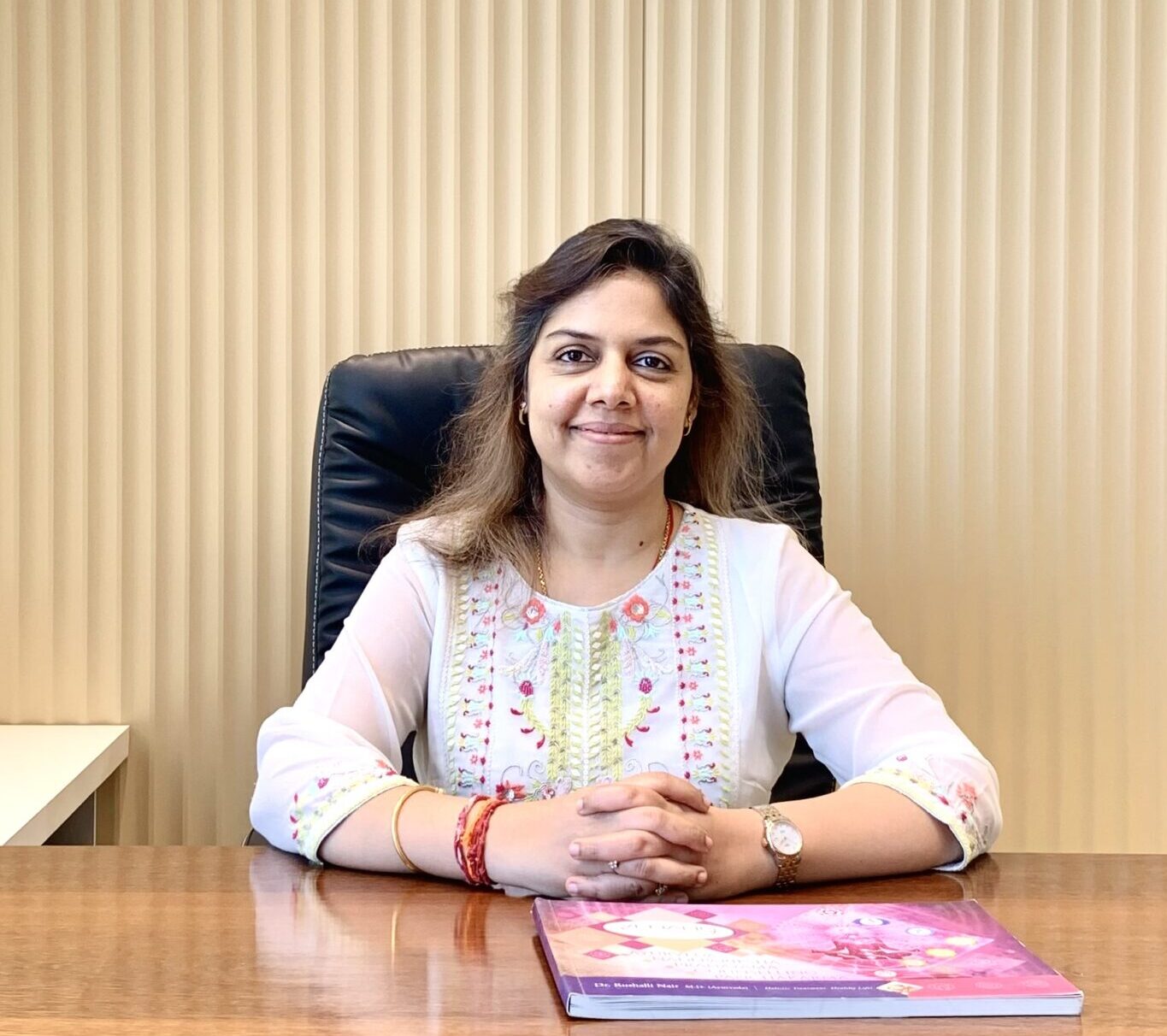
A meritorious alumna of the prestigious RA Poddar Ayurvedic College with profound spiritual understanding. She is trained in Nadi vidya by a strict guru-shishya lineage and has clinical experience with more than 20 years. An excellent orator who has been invited to various national and international platforms that empower audiences with the knowledge of Āyurveda. Dr. Rushalli Nair is the first-ever lady Vaidya who has been invited to Swaminarayan temple to offer her services to Sadhvis and devotees.