
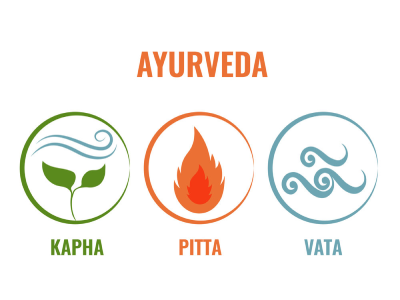
Ayurveda believes that everything in the universe is made up of five elements: ether, air, fire, water, and earth. These elements are energies finer than molecules and particles; together they are the building blocks of all we see—trees, plants, animals, humans, and even the seasons. These energies vary from one another only by their consistency and vibration. The most subtle element is ether, which condenses to become air. As air moves, it causes friction, which causes heat or fire. This fire produces moisture, which condenses into water, which ultimately compresses into earth, the densest element.
The earth element represents all visible solid matter and imparts stability, permanence, and rigidity. In our bodies, this translates to our tissues, bones, teeth, and cell structure. Water appears in anything with moisture. A large part of our body is water: our blood and fluids inside and around each cell. Fire shows itself in anything hot, acidic, or combusting. In the body, it is represented by the digestive enzymes and body temperature. Air is the wind; it is mobile and dynamic, and in the body, it governs all movements and actions, internal and external. Either is the space in which everything happens.
To maintain health, we need to identify these elemental energies, but since they are invisible, we will instead look to their inherent qualities. Each element has a handful of defining qualities, obvious ones being ‘heat’ or fire, ‘dry’ for air, ‘moist’ for water, and ‘stable’ for the earth, but there are many more. These qualities are constant and can be perceived in ourselves, our diet, atmosphere, and activities, and in the telltale impressions of the elements.
The Doshas:

In the body, the five elements (air, fire, water & earth) become biological elements and group into three energies known as doshas.
The Vata dosha is made of air & ether.
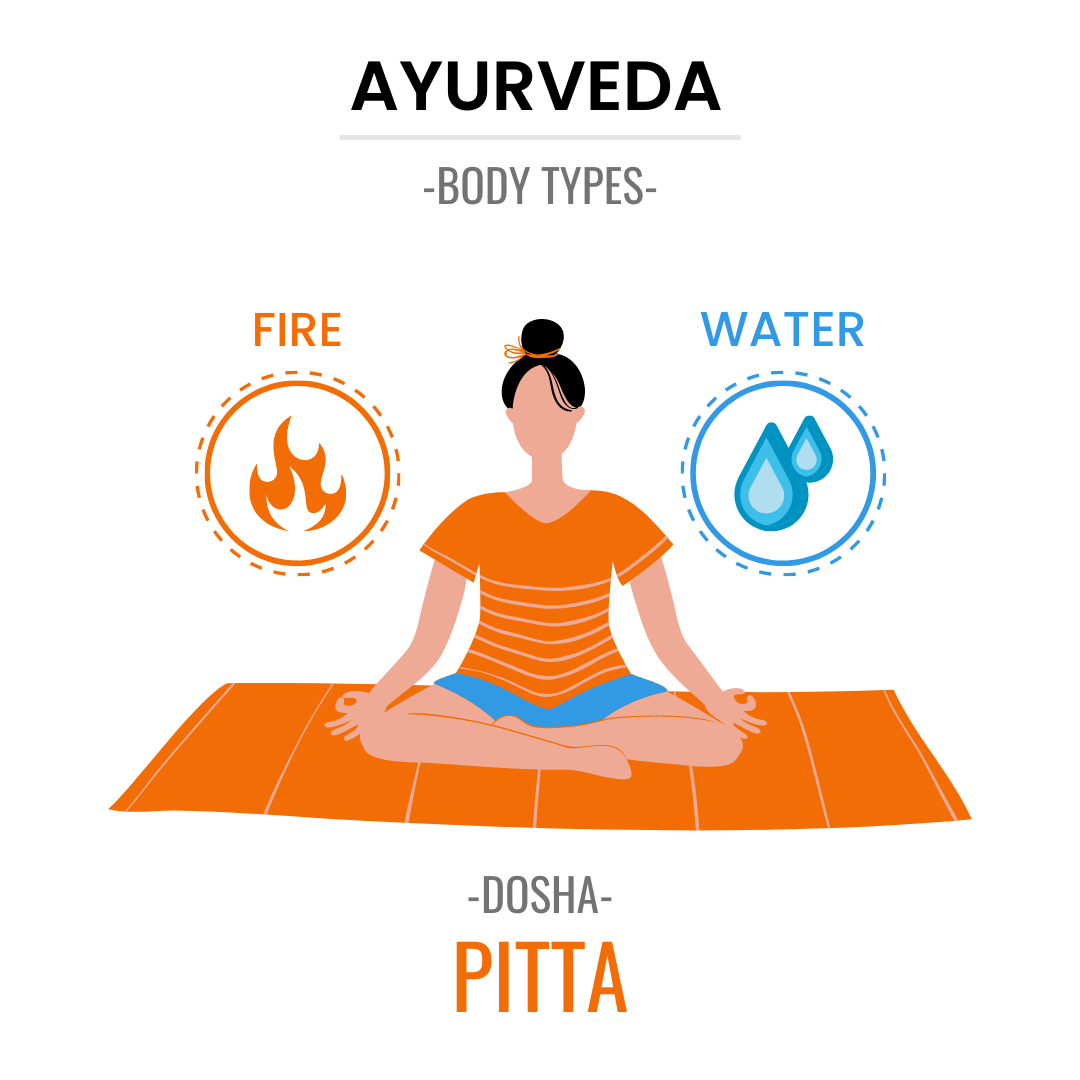
The Pitta Dosha is made of fire & a little water.
The Kapha Dosha is made of earth & water.
Our body is made up of all three doshas, and together they are responsible for everything that happens within our bodies. However, like the individuality of a snowflake, we are all made up of the same elements, but we are not all the same. This is because the doshas are rarely present in equal proportions; we are born with a unique ratio of the doshas. This unique combination makes us who we are and gives us our natural constitution, or prakruti. Your prakruti is like your DNA and comes from your parents’ own prakruti and your mother’s lifestyle and diet when pregnant. It determines what we look like, our temperament, our character, how we sleep, and how we approach and deal with situations.
As it is rare for us to have equal amounts of all three doshas, one or two will dominate. This dominant dosha becomes known as your own dosha. It reminds you which element is naturally high in your body and, therefore, which element to be particularly careful of. If you have more Pitta in your body, you will be a Pitta dosha or Pitta mind/body type, so this is the element you need to monitor in your diet and actions. So you might avoid spending too much time in the sun or eating hot, spicy meals. Most of us have two dominant doshas; for example, you could be Vata/Kapha or Pitta/Kapha (the most dominant dosha goes first). You can also have all three doshas balanced and be tri-doshic, but it is rare.
Which dosha are you?
I’ve attached the table to help you identify which dosha dominates in your body. We have all three doshas within us, so you will find yourself ticking boxes in all three columns, but ultimately one or two will dominate. To find your natural constitution (prakriti), answer the questions so the reflective part of you is in its most natural state. I answer them by looking back at how I was when I was young, before outside pressure influenced my natural habits and patterns. Then please answer the questions again based on who you are now. This will show any current imbalance. Always tackle this imbalance first when choosing food. You may use a pencil so that you can keep coming back to check your current state.
| VATA | PITTA | KAPHA | |
|---|---|---|---|
| Frame | Tall or short, low body fat, thin muscles | Medium built,moderately developed physique,good muscles | Curvy, big boned,big build or stocky, well developed muscles |
| Weight | Light and thin | Moderate weight, remains or less constant | A tendancy to gain weight |
| Hair | Course,dry,slightly wavy or fizzy | Fine,soft hair,prematurely grey or bald | Thick, oily, lustrous or wavy |
| Head and face | Small, thin,long | Moderate,ruddy,sharp contours | Large and pleasant |
| Eyes | Small,dry,attractive, shifting and unfocussed | Medium and penetrating | Large and pleasant |
| Neck | Thin,long | Medium | Large, thick |
| Skin | Thin,dry,cool,dull complexion | Warm, moist,pink,prone to skin rashes | Thick,smooth,moist,oily,soft |
| Mouth | Gappy teeth,cracked gums, grind teeth | Prone to bleeding gums,yellow teeth, can have bad breath | Strong,round,healthy teeth and gums |
| Features | Small,thin,dry(eg lips) | Medium | Large,firm,soft |
| Hands and feet | Small,thin,dry,unsteady | Medium, warm,healthy | Large,thick,cool,firm |
| Nails | Brittle,narrow, Ridged | Medium,soft, yellowish | Large,white,hard |
| Voice | Low,weak,hoarse | High pitched,moderate,sharp,good | Pleasant,deep voice |
| Body strengh | Low,poor endurance | Medium | Strong with good stamina |
| Speech | Erratic, over enthusiastic, fast talking, might missout words | Clear,sharp & measured,logical | Slow,resonant,clear,rhythmic |
| Personality | Enthusiastic,lively,creative,imaginative | Efficient &disciplined, analytical, driven, perfectionist, orderly | Loving,calm,patient,happy,supportive,ho me-loving |
| Sociability | Sometimes feels shy in social situation but can be very chatty | Outgoing and assertive | Sociable and make friends easy |
| Character | Active and busy | Organised and focused | Slow and methodical |
| Ability to forgive | Forgive and forget easily | Finds it hard to forgive | Forgives easily, but may not forget |
| Activity | Quick,unsteady and distracted | Medium,motivated,competitive, focused | Slow,measured,deliberate,enjoys repetitive tasks |
| Sexual nature and fertility | Variable,low stamina,low fertility | Moderate,passionate,domineering | Low but constant desire,good energy and fertility |
| Immunity | Variable,poor and weak | Medium, prone to infection | Strong |
| Disease tendancy | Nervous system,arthritis,stress,weakness,aches and pains | Skin rashes, inflammation, infections,fevers, acidity, heartburn | Bronchitis,asthma and allergies,congestion, obesity, high cholesterol |
| Sweat | Light and no smell | Profuse and strong smell | Moderate, cold and mild smell |
| Bowel movement | Dry, constipation tendancy,gas | Regular & loose, yellowish,tendancy towards constipation and diarrhoea | Regular,solid &well formed |
| Appetite | Variable,erratic,moderate thirst | Strong &sharp, needs lots of foods, rarely misses a meal,strong thirst | Constant, doesn't need much food but often craves it, not very thirsty |
| Memory and learning | Wuick to grasp,short term memory, inability to focus | Quick to grasp, very good memory, rarely forgets, stubborn | Takes time to grasp things but then never forgets |
| Sleep | Light,fitful sleep,wakes up early, lots of impressionable sleep, frequent dreams | Moderate but good sleeper | Deep sleeper,finds it hard to get up in the morning |
| Excitability | Quick to rise but also fall, fearful, anxiety | Quick to get excited but endures | Slow |
| Emotions when stressed | Tendancy towards anxiety,worry,fear,nervousness | Tendancy towards anger and irritation,jealousy | Tendency towards depression, and attachment, lack of motivation, self pity, greed |
| Money | Impulsive spender | Considered spender,enjoys luxuries & gourmet meals | Reluctant spender,likes to save but spends on food, entertainment and property |
| Walking | Fast,erratic | Fast but steady | Slow & steady |
| Professions | Artist,philosopher,communicators,organis ers,models,actors | Leaders,brokers, self employed, analysis,politics,education | Nurture,cares,nurses, cooks, self employed business people |
| Mental nature | Quick, adaptable but indecisive, unstable | Intelligent, critical, decisive,loves logic & structure, highly analytical | Slow, steady, sensitive |
| Religion | Erratic, changeable | Focused, fanatic | Constant,loyal,conservative |
| Recreation | Likes speed, travelling,dancing, plays,perks,artistic endeavours | Likes competitive sports, politics,debates, research,hunting | Likes flowers, sailing,eating out or cooking, watching movies, reading |
The Doshas: Qualities & Imbalances

Vata Dosha Quality—
The qualities of Vata are those of air and ether—light, dry, rough, clear, active, and cold. If you are a natural Vata type, you will probably have similar qualities—a light build, light body fat, light sleep, dry, rough skin and hair, be very active, and see things quite clearly. These are simple examples, but these qualities extend to all parts of our physiology and personality; water governs all movement, including breathing, blinking, and circulation. In nature, anything with the predominance of one or more of these qualities will have a large amount of air and ether in it—for example, the season of autumn, biscuit crackers, and exercise.
Quality of Vata When Balanced—
Happy, energetic, vibrant, enthusiastic, clear, and active mind; creative, adaptive, imaginative, innovative, sensitive, and talkative.
Quality of Vata When Imbalanced—
Weight loss, overactivity and restlessness, disturbed sleep, physical tiredness and weakness, anxiety, lots of nervous energy, and poor memory.
Aggravating Factors for Vata Dosha –
Being overactive, not sleeping enough, stress, too many bitter, astringent, and pungent foods, undereating or irregular meals, a routine, too much exercise, traveling, or stimulation, and autumn weather can also cause a minor Vata imbalance.
Explore Ayurvedic cooking for a Vata Dosha balancing diet.
Pitta Dosha Quality—
The qualities of Pitta are those of fire with a little water—hot, slightly viscous, sharp, burning, penetrating, and acidic. Pitta is liquid and flammable but not the flame itself. A person with a Pitta body type has a hot temperament, a sharp, penetrating mind and speech, and a strong digestive system. In the body, pitta gives us our body temperature and our acids and enzymes, which help us digest both food and information. Anything with any of these qualities will have a predominance of fire or Pitta, e.g., salmon, chilies, and vinegar.
Quality of Pitta When Balanced –
Content, happy, enjoys challenges and debates, sharp-minded and able to focus easily, a good orator, bold, witty, intellectual, strong digestion, and a glowing complexion.
Quality of Pitta When Imbalanced—
Aggressive, competitive, critical, demanding, perfectionist, angry, irritable, and impatient; prematurely greying hair or hair loss.
Aggravating Factors for Pitta Dosha –
Stress, being in the heat for too long, drinking too much, smoking, missing meals, eating too much spicy, sour, or salty food, hot and summery weather, or being in a hot environment can cause a minor Pitta imbalance.
Explore Ayurvedic cooking for a Pitta Dosha-balancing diet.

Kapha Dosha Quality—
The qualities of Kapha Dosha are those of earth and water—heavy, stable, cold, smooth, slow, soft, oily, and moist. Kapha, being earth and water, forms all the body’s tissues and organs (like building blocks), as well as all the moisture or water in and between the cells. People with a Kapha body type are usually heavier-built and have stable personalities who dislike too much activity or change. They have smooth, soft, and oily skin and healthy hair. Anything with these qualities will have a predominance of Kapha, such as winter, ice cream, or even a sedentary job.
Qualities of Kapha When Balanced –
Family-oriented, affectionate, loving, loyal, compassionate, forgiving, stable, relaxed, slow and methodical, good memory, and good stamina.
Qualities of Kapha When Imbalanced—
Lazy and inactive, dull, oily skin, slow digestion, lethargic, possessive, overattached, tendency to oversleep, overweight.
Aggravating Factors for Kapha Dosha –
Oversleeping and inactivity, overeating, emotional eating, getting stuck in a rut with few new experiences, and eating too many sweet, sour, or salty foods, or eating cold, wet, chilled food, or in cold, wet, chilled weather can cause a minor Kapha imbalance.
Explore Ayurvedic cooking for a Kapha-dosha-balancing diet.
Understanding our doshic constitution is critical, and once understood, it helps us make appropriate choices about food, sleep patterns, and even our compatibility with other people. Food, climate, immediate environment, and work are the factors that can have a deep impact on our prakriti
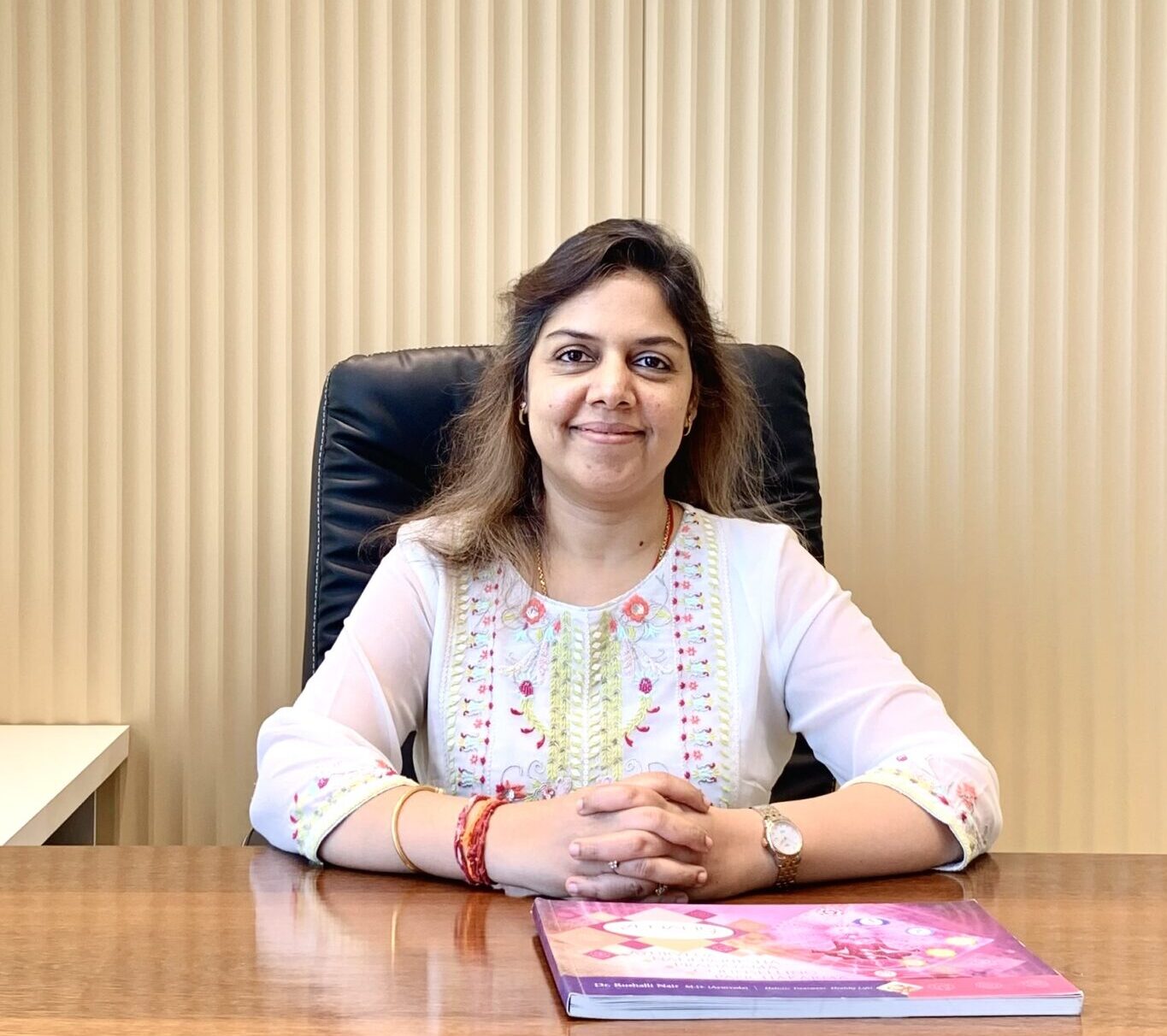
A meritorious alumna of the prestigious RA Poddar Ayurvedic College with profound spiritual understanding. She is trained in Nadi vidya by a strict guru-shishya lineage and has clinical experience with more than 20 years. An excellent orator who has been invited to various national and international platforms that empower audiences with the knowledge of Āyurveda. Dr. Rushalli Nair is the first-ever lady Vaidya who has been invited to Swaminarayan temple to offer her services to Sadhvis and devotees.