
Key Takeaways
- A Kapha-led imbalance: Ayurveda sees PCOS as all three doshas out of balance, with Kapha usually leading. Weak digestion builds up a sticky residue called ama, which blocks the channels that carry menstrual flow.
- Two common patterns: a heavy (Kapha-led) pattern and a lean (Vata-led) pattern. Most women are a blend, so the plan is shaped to you.
- Panchakarma, explained: the therapies most used for PCOS are Vamana, Virechana, Basti (including Uttara Basti) and Nasya, each with preparation and after-care. They are not needed by everyone and should only be done under a qualified Ayurvedic physician.
- Habits are part of the medicine: food, routine, yoga and pranayama support treatment. Change takes months, and no result or timeline is promised.
- Know when to seek medical care: heavy bleeding, severe pain, sudden changes or very low mood need prompt medical attention. The warning signs are listed below.
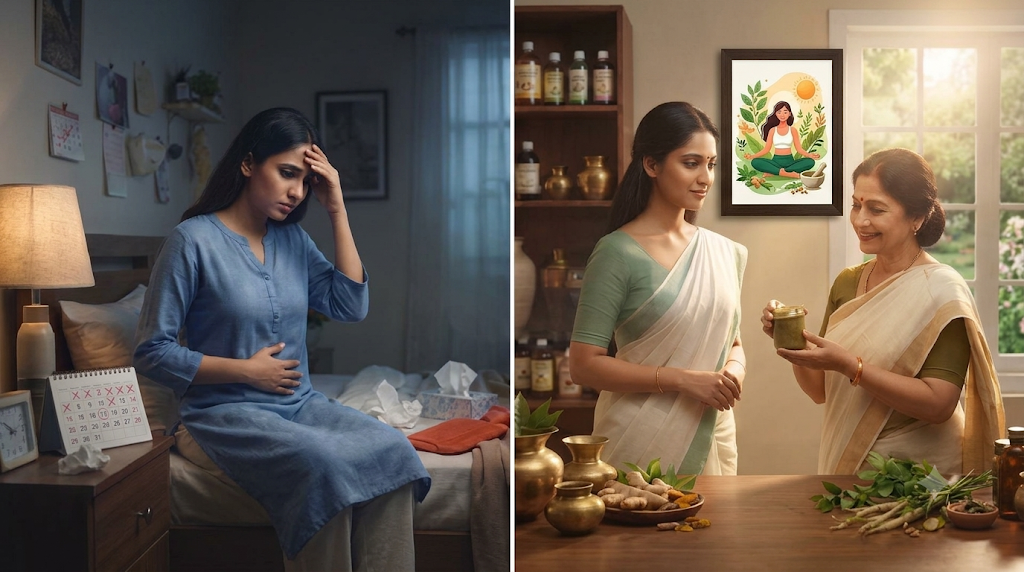
If your periods have become late, scanty or unpredictable, you may feel worried and unsure where to turn. Perhaps someone said, “It is PCOS,” and gave you a list of things to avoid. I have sat with many women in this situation.
I am Dr. Rushalli Nair, M.D. (Ayurvedic Medicine), and I have practised Ayurveda for more than 20 years. In this guide, I will explain how Ayurveda understands PCOS and how Ayurvedic medicine is used. I will also describe each Panchakarma therapy that may be used for PCOS, and the daily habits that support treatment.
You will meet some Sanskrit words, because they are the names you will hear in any Ayurvedic clinic. I will explain each one in plain language.
What is PCOS, in simple words?
PCOS stands for polycystic ovary syndrome. It is common in women during their child-bearing years. Periods become irregular, come late, or stop for months. The ovaries may hold many tiny egg sacs that have not matured. These are often called cysts.
Other signs can include acne, extra hair on the face or body, thinning hair on the head, weight gain around the belly, tiredness and mood swings. Some women also find it hard to conceive. Not every woman has all of these. Some women with PCOS are heavy and some are lean.
How does Ayurveda see PCOS?
PCOS in the classical texts
Ayurveda has no single disease called PCOS. Ayurvedic physicians relate it to several conditions described in the classical texts:
Artava Kshaya: scanty, delayed, or absent periods. Artava means menstrual flow.
• Pushpaghni Jataharini: a condition in which periods and the release of the egg are held back.
• Granthi: cyst-like swellings in the channels that carry menstrual flow.
• Stree Vandhyatva: difficulty in conceiving.
• Sthaulya and Prameha: heaviness of the body and a sluggish, sugary metabolism. These often travel along with PCOS.
No single name fits every woman. I look at which of these features is leading in you.
The three doshas, and why Kapha leads
Ayurveda describes the body through three balancing forces called doshas: Vata, Pitta and Kapha.
Think of a garden. Vata is the wind, which moves things. Pitta is the sun’s heat, which transforms things. Kapha is the soil and water, which give structure and moisture. When there is too much water and the soil turns heavy, the garden becomes waterlogged. The wind cannot move freely and the plants struggle.
In PCOS, Ayurveda sees all three doshas out of balance, but Kapha usually leads.
Kapha |
| Vata |
| Pitta |
| Gives structure and growth. Too much of it makes tissues thick and heavy and blocks the body’s channels. This fits the heavy body, sluggish cycles and cyst-like formations. | Governs movement, including the release of the egg and the flow of menstrual blood. When it is disturbed, you may see irregular or painful periods, anxiety and mood swings. | Governs heat and transformation. When it is disturbed, you may see acne, hair fall, irritability and a feeling of heat . . |
How PCOS forms, step by step
Ayurveda explains it as a chain:
1. Agni, your digestive fire, becomes weak, so food is not fully digested.
2. A sticky residue called ama builds up.
3. Kapha increases, joins with ama, and blocks the Artavavaha Srotas, the channels that carry menstrual flow and support ovulation.
4. With the channels blocked, the egg does not mature and releas
Picture a canal clogged with silt. The water source is fine, but the water cannot flow. This is why Ayurvedic care for PCOS begins with digestion and clearing the blockage, and not only with trying to “bring on” the period.
Two common patterns: heavy and lean
The heavy (Kapha-led) pattern | The lean (Vata-led) pattern |
| Weight gain, a heavy and dull feeling, slow metabolism, oily skin, late periods and a whitish discharge. | A normal or thin body, anxiety, dry skin, scanty or absent periods, weak digestion and poor sleep. |
Pitta signs, such as acne, hair fall and irritability, can mix with either pattern. Most women are a blend, so I look at you as a whole person.
“Picture a canal clogged with silt. The water source is fine, but the water cannot flow.”
What can bring PCOS on?
Ayurveda calls the causes of illness nidana. For PCOS, they are mostly everyday habits:
- Irregular meal times and irregular sleep
- Too much sweet, fried, heavy, packaged or cold food
- Sitting for long hours with little exercise
- Constant stress and worry
The first step of my treatment is Nidana Parivarjana, which means stopping what feeds the problem. No medicine works well if our habits keep feeding the imbalance.
How does Ayurvedic treatment for PCOS work?
I follow four steps, and the plan is shaped to you.
1. Nidana Parivarjana: correcting the habits that feed the imbalance.
2. Deepana–Pachana: light herbs that kindle digestion and clear ama.
3. Shodhana: cleansing therapies (Panchakarma), when you are suitable for them.
4. Shamana: medicines, diet, routine and yoga that keep the balance in place.
I begin with a long talk about your periods, digestion, sleep and stress. I also read your pulse. This is called Nadi Pariksha, and it helps me understand which dosha is leading in you. Then I decide which steps you need.
Panchakarma therapies for PCOS: the types, explained
What is Panchakarma?
Panchakarma means “five actions.” These are cleansing therapies that remove excess dosha and ama from the body. Of the classical five, these are the ones most used for PCOS:
Vamana | Virechana | Basti | Nasya |
| Therapeutic vomiting | Therapeutic purgation. | Medicated enema, including Uttara Basti | Medicated oil through the nose |
Each full therapy has three stages. Purvakarma is the preparation. Pradhanakarma is the main therapy. Paschatkarma is the after-care.
Not every woman with PCOS needs Panchakarma. Some do well with medicines, diet and routine alone. And Panchakarma should only be done under a qualified Ayurvedic physician, never at home.
Preparation before the main therapy (Purvakarma)
Deepana–Pachana. For a few days, you take light digestive herbs such as Trikatu or Panchakola Choornam. They improve digestion and clear ama.
Snehapana (internal oleation). You drink small, slowly increasing doses of medicated ghee, early in the morning on an empty stomach. This usually goes on for 3 to 7 days. The dose depends on your digestion and is adjusted each day.
- Purpose: the ghee loosens deep-seated residue and brings it towards the gut for removal.
- Signs it is working: soft skin, a better appetite, a feeling of lightness and smooth bowel movements.
- Ghees commonly used: Phala Ghrita, Triphala Ghrita and Tikta Ghrita, chosen to suit you.
Snehapana is also given on its own as a pacifying medicine, without cleansing. In that case, it is called Shamana Snehapana.
Abhyanga and Swedana. For 2 to 3 days, you have a full-body oil massage followed by herbal steam. They soften and loosen what has been collected, so the body can let it go.
Vamana (therapeutic vomiting)
Vamana is a controlled, medicated vomiting that removes excess Kapha from the chest and stomach. It is considered mainly for the heavy, Kapha-led pattern. I think of it for women with:
- Weight gain and a heavy body
- Sluggish or late periods with a whitish discharge
- Dullness, tiredness or mental fog
- Oily skin with acne
How it is done. After preparation, Vamana is done early in the morning on an empty stomach. You first take a Kapha-increasing drink such as milk or sweet rice porridge. Then you take a medicine made from herbs such as Madanaphala and Yashtimadhu. You vomit several times, under watch, until the signs of proper cleansing appear. These are a lighter body, a clearer mind and less heaviness.
Not suitable if you:
• Are pregnant, or are having your period
• Are very thin or weak
• Have severe Vata signs, such as dryness and anxiety
• Have low haemoglobin or a heart condition
Virechana (therapeutic purgation)
Virechana is a controlled, medicated loosening of the bowels. It mainly clears excess Pitta, and it is also used in the Kapha-led pattern. I think of it for women with acne, hair fall, irritability, a feeling of heat, weight gain or sluggish digestion.
How it is done.
1. You complete the preparation: digestive herbs, Snehapana, then Abhyanga and Swedana.
2. On the main day, you take a herbal purgative such as Trivrit Lehya, Avipattikara Choornam or Eranda Taila.
3. You pass several loose motions over the day, under supervision.
4. You rest, and then follow a light diet.
Afterwards, you may feel tired, and then light and hungry.
Not suitable if you:
• Are pregnant
• Have severe anaemia or extreme weakness
• Have an active infection
Basti (medicated enema)
In Basti, herbal decoctions or medicated oils are given through the rectum. Ayurveda calls Basti the foremost treatment for Vata. The downward-moving Vata, called Apana Vata, governs the periods. So Basti is used widely for menstrual and fertility problems.
In PCOS, Kapha blocks Vata’s movement. Basti helps clear that block. There are several types:
• Niruha (Asthapana) Basti: a decoction-based Basti, made with herbal decoction, honey, rock salt and oil. It is given on an empty stomach. It clears the blockage and supports digestion. Common decoctions are Dashamoola, Triphala and Eranda-moola.
• Anuvasana Basti: an oil-based Basti in a smaller amount, held for longer and given after food. It nourishes the body. Common oils are Ksheerabala, Sahacharadi, Mahanarayana and Bala Taila.
• Yapana Basti: a combination that both cleanses and nourishes. It is traditionally used in long-standing cases.
• Matra Basti: a mild oil Basti in a small amount, 25 to 60 ml. It can be given daily for a longer time because it is gentle.
• Uttara Basti: a special Basti in which medicated ghee or oil is given through the vaginal passage by a trained physician. It is given only after your period ends. It is traditionally used for the uterus and ovaries, with ghees such as Phala Ghrita and Shatavari Ghrita. Please never attempt this at home. It needs a trained physician and strict cleanliness.
Not suitable if you:
• Are pregnant
• Have an active infection, fever or diarrhoea
• Have bleeding from the rectum
• Are severely weak
Nasya (medicated oil through the nose)
In Nasya, a few drops of medicated oil, such as Anu Taila or Ksheerabala Taila, are put into the nostrils. This follows a gentle massage of the face and neck and a little steam.
Ayurveda calls the nose the doorway to the head. Nasya is traditionally used to calm the mind and ease stress and poor sleep. It is also believed to support the centres in the head that guide our hormonal rhythm. It is especially considered in the lean, Vata-led pattern. Your physician will tell you when to avoid it, for example during fever or a heavy cold.
“Panchakarma should only be done under a qualified Ayurvedic physician, never at home.”
Supporting external therapies
Udwartana |
| Abhyanga |
| A dry herbal-powder massage, done against the direction of hair growth, using powders such as Kolakulathadi Choornam or Triphala Choornam. A session lasts about 30 to 45 minutes and is followed by steam. It is used for the heavy pattern, to reduce Kapha and body fat. | A warm medicated-oil massage, usually 45 to 60 minutes. It calms Vata and the nerves, and the oil is chosen to suit your type.
. |
Swedana |
| Shirodhara |
| A herbal steam bath, often with Dashamoola, usually for 10 to 20 minutes. It opens the channels and reduces heaviness. | A continuous stream of warm oil, such as Ksheerabala, poured over the forehead for 30 to 45 minutes. It is deeply relaxing and is used for stress and poor sleep. |
Which therapy suits which pattern?
| Pattern | Therapies often considered |
| Heavy (Kapha-led) | Deepana–Pachana, Snehapana, Vamana, Udwartana, Swedana, Virechana |
| Pitta signs (acne, hair fall, irritability) | Virechana, Shirodhara |
| Lean (Vata-led) | Snehapana, Abhyanga, Basti (Niruha, Anuvasana, Matra, Yapana), Nasya, Shirodhara |
| Long-standing cases or difficulty conceiving | Yapana Basti, Uttara Basti, after careful assessment |
This is only a general guide. I choose and change the plan after I see you, and some women need no cleansing at all.
Please also tell me about every medicine you take.
What to expect during and after Panchakarma
• The preparation days: you may feel oily, a little tired and lighter. You follow a light diet.
• The main therapy day: you are watched throughout and given time to rest. Tiredness afterwards is common, and hunger returns soon.
• Samsarjana Krama: this is the gradual return to normal food after Vamana or Virechana. You begin with thin rice water (manda), then a thicker gruel (peya), then a soft, thick porridge (vilepi), and finally normal meals. This usually takes a few days.
• Rest: keep to light activity and avoid heavy physical or mental strain.
• Follow-up medicines: you may be given medicines such as Triphala or Chandraprabha Vati to continue.
Cleansing is a beginning and not an end. Many women need medicines, diet and routine for several months afterwards.
“Cleansing is a beginning and not an end.”
Ayurvedic medicines and herbs for PCOS
Medicines come under Shamana Chikitsa, the pacifying part of treatment. They are chosen for your pattern and come in several forms: kashayam (herbal decoctions), choornam (powders), gulika or vati (tablets), asava and arishta (fermented herbal tonics) and ghritam (medicated ghee).
Ayurvedic physicians commonly use formulations such as Varanadi Kashayam, Saptasaram Kashayam, Hinguvachadi Gulika, Kumaryasava, Abhayarishtam, Pushyanuga Choornam and Chandraprabha Vati. Herbs such as Shatavari, Ashoka, Lodhra, Guggulu and Triphala are also used.
I name these only so you can recognise them, not so you can buy them. Some, such as Raja Pravartini Vati, bring on menstrual flow and must never be taken when pregnancy is possible.
Please take medicines only from a qualified physician. If you already take an Ayurvedic product, check that the label lists the ingredients, the maker’s name and address, and an expiry date.
Diet for PCOS, the Ayurvedic way
In Ayurveda, food is medicine. Eat at fixed times, eat in a calm place, and chew well. A strong digestion is the base of everything else.
Reduce | Prefer |
| • Refined flour (maida), white rice, white sugar, bread, biscuits, cakes and pasta • Sweets, chocolates, ice cream and bakery items • Packaged and sugary drinks, and too much caffeine • Deep-fried, heavy or cold food. . . | • Light, warm, freshly cooked meals • Hot kanji (light porridge) • Steamed foods such as idiyappam, puttu or idli, and chapati • Boiled or lightly cooked vegetables • Leafy greens, radish and dals • Enough water through the day. . |
By pattern:
- In the heavy pattern, choose warm, light, drier foods such as radish, dals and leafy greens.
- In the lean pattern, choose warm, soft, nourishing food such as cooked vegetables, whole grains and a little ghee.
- Spices such as cumin, fennel or ginger in warm water can help some women, but please ask me first.
I have written about this in more detail in an Ayurvedic PCOS diet.
“In Ayurveda, food is medicine.”
Daily routine, yoga and pranayama
A steady routine is part of the medicine.
- Sleep and wake at the same time each day.
- Eat meals at fixed times.
- Walk daily, and avoid extreme or exhausting exercise.
- Do a gentle self-massage (abhyanga) with an oil suited to your type. Ask me which oil.
- Make small, regular time for rest and calm.
| Yoga poses traditionally recommended for PCOS • Supta Baddha Konasana (reclining butterfly), which opens the hips and relaxes the lower back • Bhujangasana (cobra) • Setu Bandhasana (bridge) • Dhanurasana (bow) • Malasana (garland squat) • Paschimottanasana (seated forward bend) • Ustrasana (camel) | Pranayama (breathing practices) often advised Nadi Shodhana (alternate-nostril breathing), which calms the mind • Bhramari (bee breath), which soothes the nerves • Kapalabhati (skull-shining breath), which is brisk and energising • Ujjayi (victorious breath), which settles restlessness • Sheetali (cooling breath), which cools the body and mind.
|
Please learn these from a trained teacher. Ask your teacher and me which ones to skip during your period or if you have back, neck or other problems. Stop at once if you feel dizzy.
How long does Ayurvedic care take?
Cycles move slowly, so the change cannot be judged in days. Many women need three to six months, or longer, of steady care before they can see a pattern. Panchakarma is usually followed by months of medicines, diet and routine.
Some women notice steadier cycles, some need more time, and some need their plan changed along the way. I would be careful with anyone who promises otherwise.
For Panchakarma, ask whether a physician and trained therapists will be present, and whether the rooms are clean and private. I have written a separate guide on Panchakarma Benefits and Side Effects : An Honest Overview
Frequently asked questions
Can Ayurveda cure PCOS?
Ayurveda aims to correct the imbalance at its root: digestion, doshas and daily habits. Many women find their cycles steadier over several months, but results differ from person to person.
Is Panchakarma necessary for every woman with PCOS?
No. It depends on your pattern, your strength and your stage. Some women do well with medicines, diet and routine alone.
Is Panchakarma painful or unsafe?
It is not painful. Some steps can leave you tired. It is safe when done by a qualified physician after proper assessment, and it can be unsafe without supervision or when done in someone who is not suitable.
Can I have Panchakarma during my period?
Not always. Vamana is avoided during menstruation, and Uttara Basti is given only after your period ends. Your physician will plan the timing around your cycle.
Can I take the medicines named here on my own?
No. They are chosen for your pattern, and some are strong. Please take them only from a qualified physician.
A few last words
PCOS can feel as if your body has stopped following a rhythm. Ayurveda sees it as a body asking for rhythm: regular food, enough sleep, steady movement and a calmer mind. In my experience, these small daily habits often matter more than any single therapy.
Be patient with yourself, and please do not try to work it all out alone.
If you would like to talk through your own situation, I am happy to see you at my clinic in Bandra and walk you through it in person.
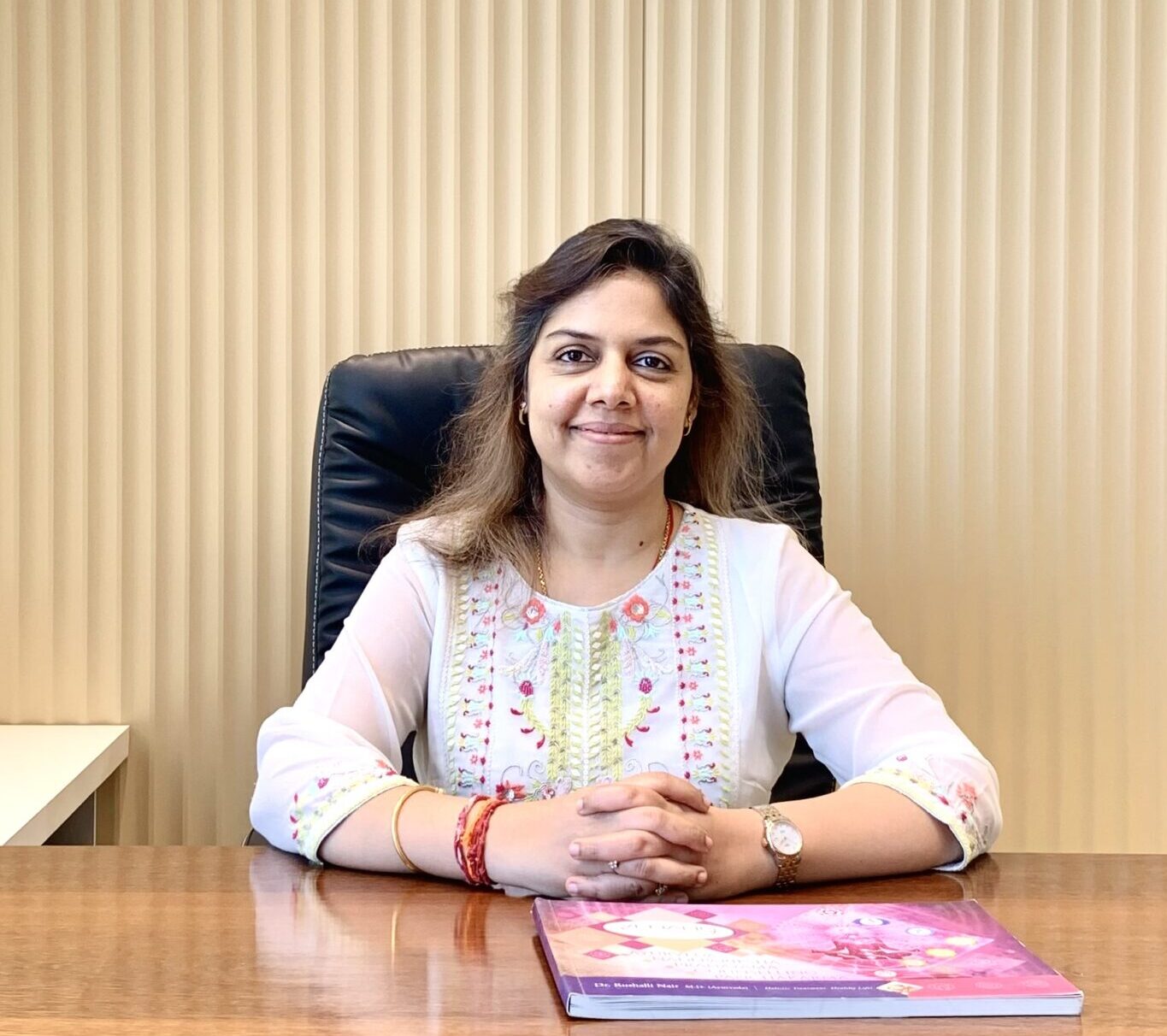
A meritorious alumna of the prestigious RA Poddar Ayurvedic College with profound spiritual understanding. She is trained in Nadi vidya by a strict guru-shishya lineage and has clinical experience with more than 20 years. An excellent orator who has been invited to various national and international platforms that empower audiences with the knowledge of Āyurveda. Dr. Rushalli Nair is the first-ever lady Vaidya who has been invited to Swaminarayan temple to offer her services to Sadhvis and devotees.