
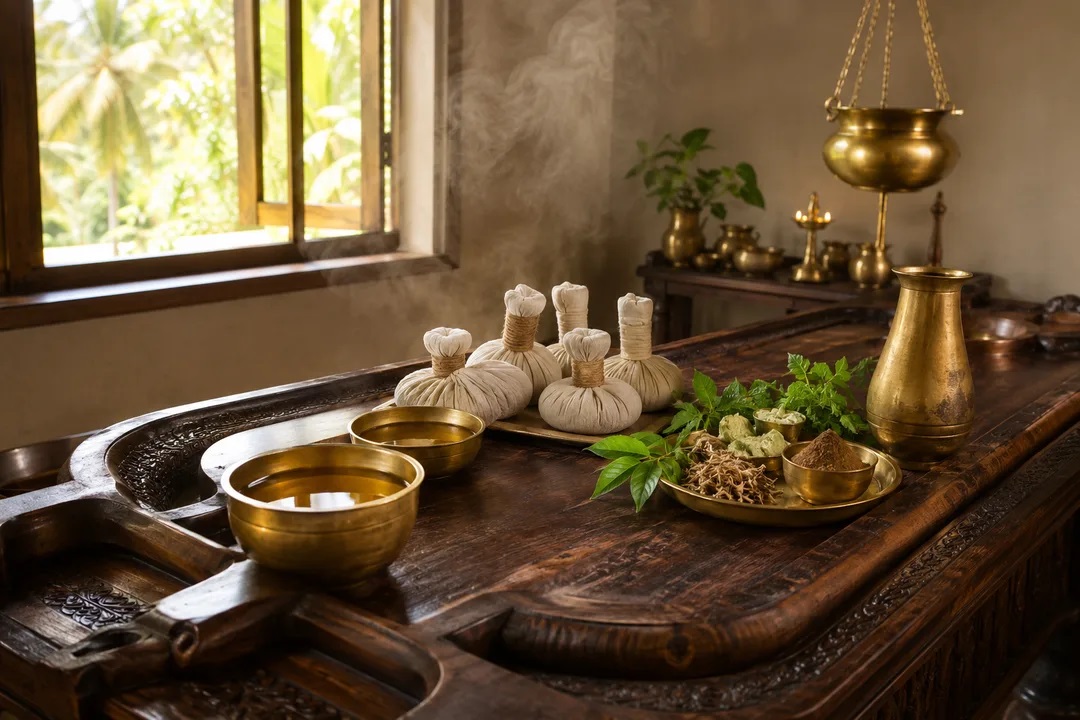
If you are wondering whether Panchakarma (a set of traditional Ayurvedic cleansing & rejuvenating treatments) could help you, or whether it might be too harsh for you or your parent, those are good questions to ask. Many people come to me with the same worry. They have heard it called a “deep cleanse” and they are not sure what to believe.
I am Dr. Rushalli Nair, an Ayurvedic doctor (M.D. in Ayurvedic Medicine) in Mumbai, and I have practised for more than 20 years. In this guide, I will tell you what Panchakarma is, what may help, what can go wrong, and who should take extra care. I will keep it simple and honest. You can read it at your own pace, or share it with a family member.
What is Panchakarma, in simple words?
Panchakarma is a set of cleansing and rejuvenating treatments from Ayurveda. Ayurveda is the traditional system of medicine from India. The word “pancha” means five, and “karma” means action. So the name points to five main actions, or therapies.
Think of it this way. Daily habits, like eating well and sleeping on time, are like sweeping your house every day. Panchakarma is like a careful spring-clean, done in stages by trained people. It is not a quick scrub. It needs preparation, and rest afterwards.
Ayurveda explains health through three body tendencies called doshas. You can picture Vata as wind, which is movement. Pitta is like fire, which is heat and digestion. Kapha is like earth and water, which is steadiness. Ayurveda says that when these fall out of balance, they can contribute to ill health. This is a traditional way of understanding the body, and modern tests do not measure it in the same way.
Panchakarma usually has three phases:
- Preparation: oil treatments, such as a gentle oil massage, and warm steam to get the body ready.
- Main therapies: these are the cleansing steps. The classical texts describe five of them, though they differ a little on which five. Which ones are used depends on the person, and not every person needs all of them.
- Recovery: light, simple food and rest while the body settles.
I should be plain about the main therapies. Some are gentle, such as medicated oil drops in the nose. Others are meant to clear the body through the bowels or by vomiting, or with medicated enemas. These are done carefully under a doctor’s eye, and they can feel tiring or uncomfortable. I tell you this now so that nothing comes as a surprise.
What are the benefits of Panchakarma?
I will tell you what I see in my practice, and also what research can and cannot yet tell us.
What do patients commonly tell me they notice?
Some patients tell me they feel lighter, sleep better, or have more comfortable digestion after a course of treatment. Others say they feel calmer and more rested. Some notice very little, and that is also a real answer. Experience differs from person to person.
Ayurveda teaches that preparation and recovery are part of the treatment, not extras. I have found that this matters. Many patients who rest and eat simply afterwards tell me they feel more settled.
Can Panchakarma help with weight loss?
Some people report a small change in weight during or after a programme. But Panchakarma is not a quick way to lose weight, and the evidence for it as a weight-loss treatment is limited. Lasting weight management depends on food, movement, sleep and your overall health.
What Panchakarma cannot do
- It is not a cure for serious or long-term illness, and it does not replace your medicines or regular check-ups.
- It cannot undo years of habits in a few days.
- It does not suit everyone, which I explain below.
What are the side effects of Panchakarma?
Because these treatments are active ones, side effects can happen. I would rather you hear that from me than be surprised later.
Common effects, often mild
During or after some treatments, you may feel tired or weak. Some people get a mild headache or nausea. Loose stools are common too, and with some therapies they are part of the plan. This happens because the body is being asked to clear things out and then rest. In my experience, these effects often ease as the body rests, but how long they last depends on the person and the treatment. Your doctor or team should check on you regularly and change the plan if needed.
Less common effects that need attention
Some effects need a doctor’s attention. These include dehydration (too little water in the body, which can bring dry mouth, dizziness and very little urine), low blood pressure, and swings in blood sugar, especially in people with diabetes. An existing complaint can also flare up for a while. Some people feel emotional, irritable or tearful.
If you notice any of these, tell your doctor straight away. Please do not try to push through them or ignore them.
Why do side effects happen more often when it is done the wrong way?
The risk goes up when treatment is done without a proper check-up, without preparation, or by people who are not trained. This is one reason I worry about trying Panchakarma at home from videos or kits. Some simple habits are fine at home, and I mention them below. The main therapies need a trained person watching over you.
The quality of herbs and oils also matters. Some Ayurvedic products, especially those made without proper quality checks, have been found to be either inefficient or can give rashes. Please use products from reliable makers, and ask where they come from.
What does Panchakarma feel like? (What to expect)
Many people expect something harsh, and others expect only a relaxing massage. The truth is somewhere in between.
Before any programme, I begin with a long conversation and a check-up. I also read the pulse, which is a traditional way of assessing the body through the pulse at the wrist. I do this because the same plan does not suit every person. You can read my article – Panchakarma and Nadi Pariksha: Why This Ayurvedic Step Matters.
A typical day may include a talk with the doctor, a warm oil massage, gentle steam, rest, and light, simple meals. On the days of the stronger therapies, you may feel tired and need more rest. The exact plan depends on you and on what your doctor advises.
Before each step, your doctor or therapist should explain what will happen. You can ask questions, or ask to pause, at any time. Your comfort and privacy matter.
A short programme, say five days, looks different from a longer one. I walk through the days in what happens in a 5 day Panchakarma program. Rest, simple food, and less time on screens are part of the process. They are not extras.
Who should be careful, and when should I see my doctor first?
Some people need extra care. Please speak to your Ayurveda doctor before starting if any of these apply to you or the person you are helping.
Who should speak to their regular doctor before starting?
- Pregnancy, young children, and people who are very weak, frail or very elderly.
- Heart disease, diabetes, blood pressure problems (high or low), kidney or liver problems, a bleeding problem, or the use of blood thinners.
- Recovery from surgery, an infection or fever, or current treatment for cancer.
- Any serious or long-term illness.
- Regular medicines. Please do not stop them without your own doctor’s advice.
Even if your condition is well controlled, please check first. Your doctor knows your health history best.
Warning signs: when to stop and get help
Please stop the treatment and get medical help if you have any of these: vomiting or loose stools that are severe or do not stop, fainting, chest pain, trouble breathing, black or bloody stools, very little urine, severe weakness, confusion, or any symptom that frightens you.
Panchakarma at a clinic, at home, or at a detox retreat: how do they differ?
Supervised Panchakarma starts with a medical check-up, a plan made for you, and follow-up afterwards. Do-it-yourself “home Panchakarma” usually leaves these out. A detox retreat or juice cleanse is a general wellness programme, which may or may not involve a doctor. Each person has to decide what suits them, and I am not here to criticise other choices.
The main difference is supervision. A doctor can change the plan if your blood pressure drops or you feel unwell. At home, there may be no one trained to notice early.
There are simple things many people can do at home: drink warm water, eat lighter meals, and rest more. If your doctor has asked you to limit fluids, or you have diabetes or take regular medicines, please check first. Please leave the main treatments to trained practitioners. If you live in Mumbai and are thinking about Panchakarma at home, speak to a doctor first.
How do I choose a safe Panchakarma centre in Mumbai?
There is no single “best Panchakarma center in Mumbai” for everyone. The right one is the one that is safe and suitable for you. If you are searching for a Panchakarma detox near you, these questions can help:
- Is there a qualified, registered Ayurvedic doctor? Look for BAMS, which is the basic Ayurvedic medical degree in India, or a postgraduate degree such as an M.D. in Ayurvedic Medicine. You can politely ask to see their registration.
- Will you have a medical check-up, including questions about your medicines, before treatment starts?
- Are the risks explained to you in plain words?
- Is there follow-up after the programme?
Cost can differ a lot between places. It depends on the length of the programme, how many therapies are used, how much the doctor is involved, and whether it is day care or a stay. Please ask for a clear list of what is included.
If you are looking in Mumbai, including Bandra, take your time. Visit, ask questions, and notice how the team answers you.
Frequently Asked Questions
Is Panchakarma safe for everyone?
No. Some people need extra care, such as those who are pregnant, have heart disease or diabetes, or are very frail. A doctor’s check-up first helps decide what is suitable.
How long do side effects last?
It depends on the person and the treatment. In my experience, mild tiredness often eases as the body rests. If anything feels worse instead of better, tell your doctor.
Can I do Panchakarma at home?
Some supportive habits, like warm water and light meals, are fine for many people. The main therapies need a trained person to supervise you. Please speak to a doctor first.
Will Panchakarma help me lose weight?
Some people report a small change, but Panchakarma is not a quick way to lose weight, and the evidence is limited. Food, movement and sleep matter more over time.
Can I keep taking my regular medicines during Panchakarma?
Please do not stop or change them on your own. Tell both your regular doctor and your Ayurvedic doctor, and bring a list of your medicines. Let them decide together.
A final word
Panchakarma can be a helpful part of care for some people. It is not for everyone, and it should not be rushed. Asking questions before you begin is a sign of good judgement, not doubt.
If you would like to talk through whether Panchakarma suits you or someone you love, I am happy to go through it with you in person at Vedang Clinic in Bandra.
This guide is general information. It does not replace personal medical advice.
Dr. Rushalli Nair, M.D. (Ayurvedic Medicine)
A meritorious alumna of the prestigious RA Poddar Ayurvedic College with profound spiritual understanding. She is trained in Nadi vidya by a strict guru-shishya lineage and has clinical experience with more than 20 years. An excellent orator who has been invited to various national and international platforms that empower audiences with the knowledge of Āyurveda. Dr. Rushalli Nair is the first-ever lady Vaidya who has been invited to Swaminarayan temple to offer her services to Sadhvis and devotees.