Key Takeaways
- Common and often manageable: Fatty liver is common. In its early stages, it can often improve with steady changes in food and daily habits.
- Tests come first: Many people feel nothing, so blood tests, an ultrasound or a FibroScan are needed to know where the liver stands.
- Support, not replacement: Ayurvedic care works alongside medical care. Pulse reading (Nadi Pariksha) does not replace scans or blood tests.
- A whole-routine plan: Food, movement, sleep and daily rhythm are the core. Herbs, Panchakarma and “detox” products need medical supervision and care.
- Slow and honest: Change usually comes over months, and no one can guarantee a cure.
If a scan or blood report has told you that you have a fatty liver, it is natural to feel worried. I meet people with this concern often in my practice. Many arrive anxious, holding a report they do not fully understand.
First, some reassurance. Fatty liver is common. In its early stages, it can often improve with steady changes in food and daily habits.
I am Dr. Rushalli Nair, an Ayurvedic physician with an M.D. in Ayurvedic Medicine. I have been in practice for more than 20 years, and I see patients from India and abroad. In this guide, I will explain how Ayurvedic treatment for fatty liver works, what it can and cannot do, and what a sensible plan looks like in Mumbai. Ayurvedic care here means support alongside proper medical tests. It is not a replacement for them.
What is fatty liver, in simple words?
Your liver sits on the upper right side of your belly. It helps your body use food, store energy and clear waste. A small amount of fat in the liver is normal. Fatty liver means too much fat has built up there.
Think of your liver as a busy kitchen. A little stored oil is normal. In fatty liver, the shelves get overcrowded and the kitchen works less smoothly.
Fatty liver often causes no symptoms. Most people find out by chance, on an ultrasound done for another reason or on a routine blood test.
Is “non alcoholic fatty liver” different?
Non alcoholic fatty liver means fat has built up in the liver of someone who drinks little or no alcohol. It is closely linked to body weight, diabetes, high cholesterol and daily habits.
Doctors are now starting to use a newer name, MASLD, for most of the same condition. You may see either name on a report. If you are unsure what yours means, ask your doctor to explain it.
Thin people can have it too. This surprises many people, but body size alone does not tell the whole story.
Why do so many people in Mumbai have it?
Mumbai life can make it easy to slip into habits that do not help the liver. Long commutes, desk jobs, late dinners, takeaway and fried food, sweet chai and very little walking can all add up over the years. I do not have exact figures for Mumbai, but these habits will be familiar to most people who live here.
In my years of practice, I have noticed that many people with busy city routines struggle to find time for regular meals and movement. This is not about blame. Most people are simply doing their best through a demanding day.
What are the signs and symptoms of fatty liver?
Many people feel nothing at all. Some notice tiredness, a heavy or full feeling in the upper right belly, or a general sluggishness.
These feelings can come from many other causes, such as poor sleep, stress or low iron. So symptoms cannot tell you whether you have fatty liver. Proper tests are needed to know.
A few signs are more serious and need prompt medical attention. I list them in the safety section below.
How is fatty liver confirmed, and why do I still need regular tests?
Doctors usually use a few simple tests:
- Liver blood tests. These measure substances in your blood that can rise when the liver is irritated. The results can look normal even when there is fat in the liver.
- This uses sound waves to make a picture of your liver. It is painless, but it may miss small amounts of fat.
- This is a painless scan that measures how stiff the liver is. Stiffness can be a sign of scarring.
Because each test has limits, doctors often use more than one.
Ayurveda works best when we know where the liver stands.
I ask my patients to get proper tests and follow-ups. If you do not have recent reports, I will ask you to get them first. Ayurveda works best when we know where the liver stands.
I should also be honest about pulse reading. Nadi Pariksha, which I explain below, is a traditional way of understanding the whole person. It is not a replacement for scans or blood tests. If you would like to read my article – Nadi Pariksha Explained : A simple guide to pulse diagnosis
How does Ayurveda look at fatty liver?
Ayurveda is a traditional system of medicine from India. It looks at health as a balance between the body, digestion, mind and daily routine.
What follows is the Ayurvedic view. It is a traditional way of understanding the body. It is not the same as a modern medical diagnosis. Here are three words you will see:
- Ayurveda describes three body “tendencies”: Vata, Pitta and Kapha. Together, they describe a person’s natural make-up and where an imbalance may lie.
- This means “digestive fire”, the body’s power to digest food and absorb what it needs.
- This means undigested residue that the body has not processed well.
Here is a simple way to picture it. If a gas stove burns weakly, food does not cook properly and leftovers pile up. In Ayurveda, a weak agni is thought to leave behind ama.
Classical Ayurvedic texts do not describe “fatty liver” by that name. Many Ayurvedic physicians, including me, relate it to vitiated Kapha (the heavy, slow tendency), weak digestion, heavy or oily food, and a routine with little movement. This is a traditional way of thinking. It guides how I plan care. It is not proof on its own.
What can Ayurveda honestly offer, and what can’t it do?
Ayurveda can offer a structured plan for food, daily routine, movement and sleep, shaped around you. For many people, the hardest part is sticking with changes, and a plan that fits your life may help with that.
Research on Ayurvedic medicines for fatty liver is limited, and much of it is small or of mixed quality. I cannot promise to clear a fatty liver. Results vary from person to person.
What does Ayurvedic treatment for fatty liver actually involve?
It is a combination of steps, planned for you after a full consultation. No two plans are exactly the same.
A detailed consultation, including Nadi Pariksha
Nadi Pariksha means pulse reading. I feel the pulse at your wrist. In the Ayurvedic view, it gives clues about your balance, digestion, stress patterns and psychosomatic energies.
People often ask me whether Nadi Pariksha for fatty liver can replace a scan or blood test. It cannot. It is a little like a mechanic listening to an engine. It gives clues, but it does not replace a diagnostic scan. To my knowledge, there is no strong research showing that pulse reading can detect fatty liver on its own.
In more than 20 years, I have read thousands of pulses. I find it helps me ask better questions and understand each person’s routine. Before I do any reading, I go through your reports, your medicines and your medical history.
Food and the Ayurvedic diet for fatty liver
A sensible diet for fatty liver is mostly about cutting down on what overloads the liver and adding more of what is simple and whole.
- Eat less sugar, refined flour (maida), fried food, packaged snacks and sugary drinks.
- Eat more vegetables, dal, whole grains and millets such as jowar and bajra.
- Keep alcohol to a minimum, or avoid it if your doctor has advised that.
- Eat at regular times, and try not to eat late at night.
- Keep certain food combinations in mind like avoid combining sweet and salty.
Ayurveda also stresses warm, freshly cooked, simple meals eaten without rushing. It links good digestion (agni) with good health.
Small swaps can work in Mumbai. For example, you might choose a home-cooked jowar or bajra roti with vegetables and dal instead of vada pav, and avoid chai with it.
No single food “cleans” the liver. What matters is the overall pattern, week after week. For more detail, read my article – ‘8 strong rules of Ayurveda to be always followed after meals’.
Daily routine, movement and sleep (fatty liver management)
Fatty liver management is mostly about daily habits. Walking and gentle yoga are good places to start, if your doctor agrees they suit you. A common guideline is about 150 minutes of moderate activity a week, which is around 30 minutes of brisk walking on five days.
For people carrying extra weight, losing a modest amount slowly, around 5 to 10 percent of body weight, is one of the better-supported ways to reduce liver fat. Ask your doctor what is right for you.
A steady sleep routine, regular meal times and a few minutes of calm breathing each day may also help. This is what I mean by fatty liver management. It is a steady habit, not a quick fix.
Herbs and Ayurvedic medicines: handle with care
Your liver processes much of what you swallow. “Natural” does not automatically mean safe.
Some herbal products, including some Ayurvedic ones, have been linked to liver injury. Please do not self-medicate, and please be careful with “liver tonics” you see advertised. Show every medicine and supplement to a qualified doctor.
This is also why I do not list herbs or doses in this article. In my view, any Ayurvedic medicine should be chosen for you, after your reports have been reviewed.
Panchakarma, including the 5 day Panchakarma program
Panchakarma is a set of traditional Ayurvedic cleansing and restoring therapies, done under supervision. The word means “five actions”.
Panchakarma for fatty liver may be one part of a supervised plan for some people. A short program, such as a 5 day Panchakarma program for fatty liver, is sometimes used this way. What it includes depends on the person, their reports and their strength.
I cannot say that Panchakarma removes liver fat. There is not enough good research to show that, and it is not a substitute for daily habits. In my view, the habits you keep afterwards matter more.
What about “fatty liver detox”?
You may see fatty liver detox teas, juices and kits advertised. Your liver already filters your blood on its own. I am not aware of any tea or juice that has been shown to flush fat out of it.
In Ayurveda, “shodhana” means cleansing. It is done through supervised therapies, not store-bought products. Supervised Panchakarma is a medical therapy. It is a different thing from the detox kits you can buy. Detox kits and extreme fasts can do harm, so please be careful with them.
What will it feel like? What to expect at a first visit
A first consultation is mostly a conversation. We talk about your symptoms, food habits, sleep, stress, medicines and test reports. It helps to bring all your reports and a list of everything you take.
The pulse reading takes only a few minutes. It is painless. I place my fingers on your wrist and feel the pulse.
After that, I explain the plan step by step. Your questions are welcome at any point.
If Panchakarma is advised, what is done depends on the person. Therapies often include various procedures like Abhyanga, Shirodhara or Yogbasti. Some patients find this relaxing, though experiences differ. If you feel unwell at any point, tell your doctor straight away. Follow-up tests are part of the process too.
Which home remedies are reasonable, and which should I avoid?
People often ask me about home remedies for fatty liver. Some are sensible:
- Regular walking
- More vegetables and fibre
- Regular water through the day
- Less sugar
- Modified and healthy fat intake
Turmeric, amla and fenugreek (methi) are common in Indian kitchens. Using them in food is one thing. The evidence for them as a treatment for fatty liver is limited. High-dose supplements are different from kitchen use, and they can strain the liver in some people.
How long does it take, and how will I know it’s helping?
Change usually comes slowly, often over months. Results vary from person to person.
Signs of progress may include better energy and digestion, gradual weight loss if you were carrying extra weight, and improved test results. Feeling better is encouraging, but only tests can show what is happening inside the liver. Your treating doctor will advise you when to repeat blood tests and ultrasound.
Steady habits matter more than speed.
I do not promise quick results. Steady habits matter more than speed.
Who should be careful, and when should I see a doctor first?
Please see a doctor of modern medicine as soon as you can, before any Ayurvedic treatment, if you have:
- Yellowing of the eyes or skin
- A swollen belly or swollen legs
- Unexplained weight loss
Please go to a hospital emergency department right away if you have:
- Vomiting blood
- Black or bloody stools
- Confusion or unusual drowsiness
- Severe belly pain
Please also speak to your regular doctor first if you:
- Have diabetes or heart disease
- Take regular medicines, such as blood thinners, diabetes tablets or cholesterol medicines
- Are pregnant
- Drink alcohol regularly
- Have been told you have scarring of the liver or cirrhosis (an advanced liver condition)
I believe care works better when all your doctors know what the others are advising. If you are already seeing a gastroenterologist (a liver and digestive specialist) or physician, please tell them about any Ayurvedic care you are considering.
How do I choose an Ayurvedic doctor in Mumbai?
Here is what I would look for:
- A recognised Ayurvedic degree, such as BAMS (Bachelor of Ayurvedic Medicine and Surgery) or M.D. (Ayurveda), and registration with the relevant state council or national commission. You can ask to see the registration number.
- A doctor who asks for your reports and is open to working with your other doctors.
- A doctor who does not promise a cure.
- Caution about anyone selling a branded “liver detox” package or quick fixes.
You can also ask what the plan involves, how follow-up works and how progress will be measured. A proper consultation takes time. Travel across Mumbai can be tiring, so ask whether some follow-ups can be done by phone or online.
Frequently asked questions
Can Ayurveda cure fatty liver?
I cannot promise that, and no one can guarantee a cure. Fatty liver in its early stages can often improve with steady lifestyle changes, and Ayurveda may support that. Repeat tests will show how things are changing.
Can I take Ayurvedic treatment along with my regular medicines?
Often it can be coordinated, once your doctors have reviewed everything you take. Tell every doctor you see about all your medicines and supplements. Some herbs can interact with medicines such as blood thinners, diabetes tablets and cholesterol medicines.
Is a 5-day Panchakarma enough on its own?
In my view, a short program along with diet and lifestyle modification is best seen as one part of a longer plan.
Do I have to give up ghee and oil completely?
Most people do not need to give up oil or ghee completely, but the amount matters. Keep it small, and cook with less oil. If you have high cholesterol or take regular medicines, ask your doctor how much is right for you.
Can I start Ayurvedic care without visiting Mumbai in person?
Some consultation and follow-up can be done online, such as reviewing your reports, food and routine. A pulse reading in person and therapies such as Panchakarma need a visit.
A last word
If you have just been told you have fatty liver, please try not to panic. It is common, and in many cases it can be managed. In my experience, small, steady changes in food, lifestyle and sleep often matter more than any single therapy. Good Ayurvedic care and good conventional care can work well together.
If you’d like to talk through your own reports and what a gentle, step-by-step plan could look like, I’m happy to sit down with you at my clinic in Bandra.
This article is for education only and is not a substitute for medical advice, diagnosis or treatment. Please speak to a qualified doctor about your own health.
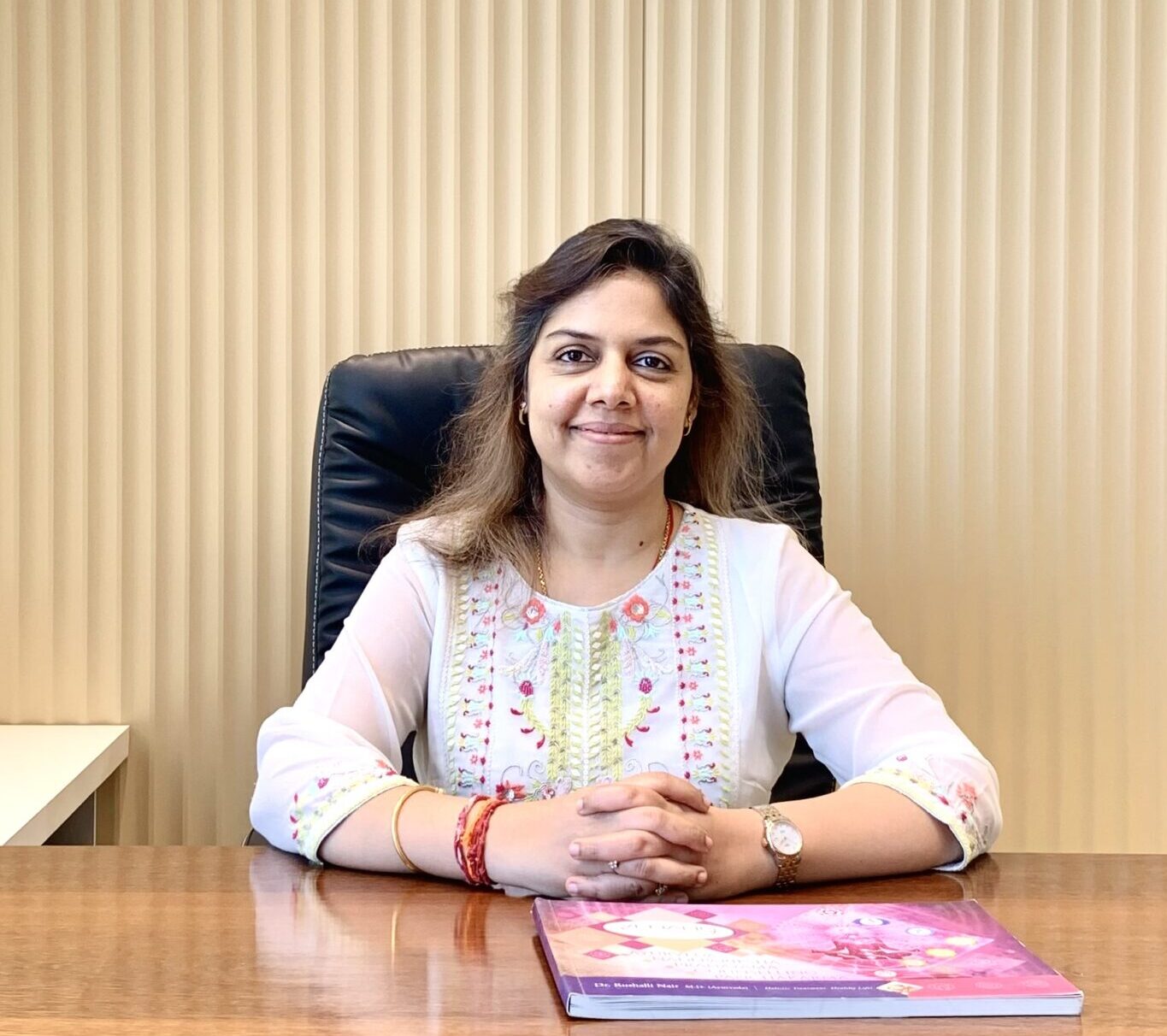
A meritorious alumna of the prestigious RA Poddar Ayurvedic College with profound spiritual understanding. She is trained in Nadi vidya by a strict guru-shishya lineage and has clinical experience with more than 20 years. An excellent orator who has been invited to various national and international platforms that empower audiences with the knowledge of Āyurveda. Dr. Rushalli Nair is the first-ever lady Vaidya who has been invited to Swaminarayan temple to offer her services to Sadhvis and devotees.